ADSS Desktop Trader
Overview
I was the Lead Product and UX Designer for ADSS’s new flagship retail trading platform. Delivered by Adaptive Financial Consulting, ADSS’s long-term strategic and technology partner, the engagement spanned more than two years
I joined at the earliest stages, working closely with Ed Clayforth-Carr, Adaptive’s Head of Experience, who led much of the initial discovery and strategic direction
Building on that foundation, I led the product design through to delivery across both mobile and desktop -covering UX, interaction and visual design. As the platform evolved, additional designers joined to support smaller features and ongoing enhancements
Deliverables
Discovery and strategy collaboration
End-to-end product design
UX, interaction and visual design
Design system and delivery
Challenges
ADSS serves a broad audience, from relatively new retail traders to experienced investors managing multiple markets, positions and orders
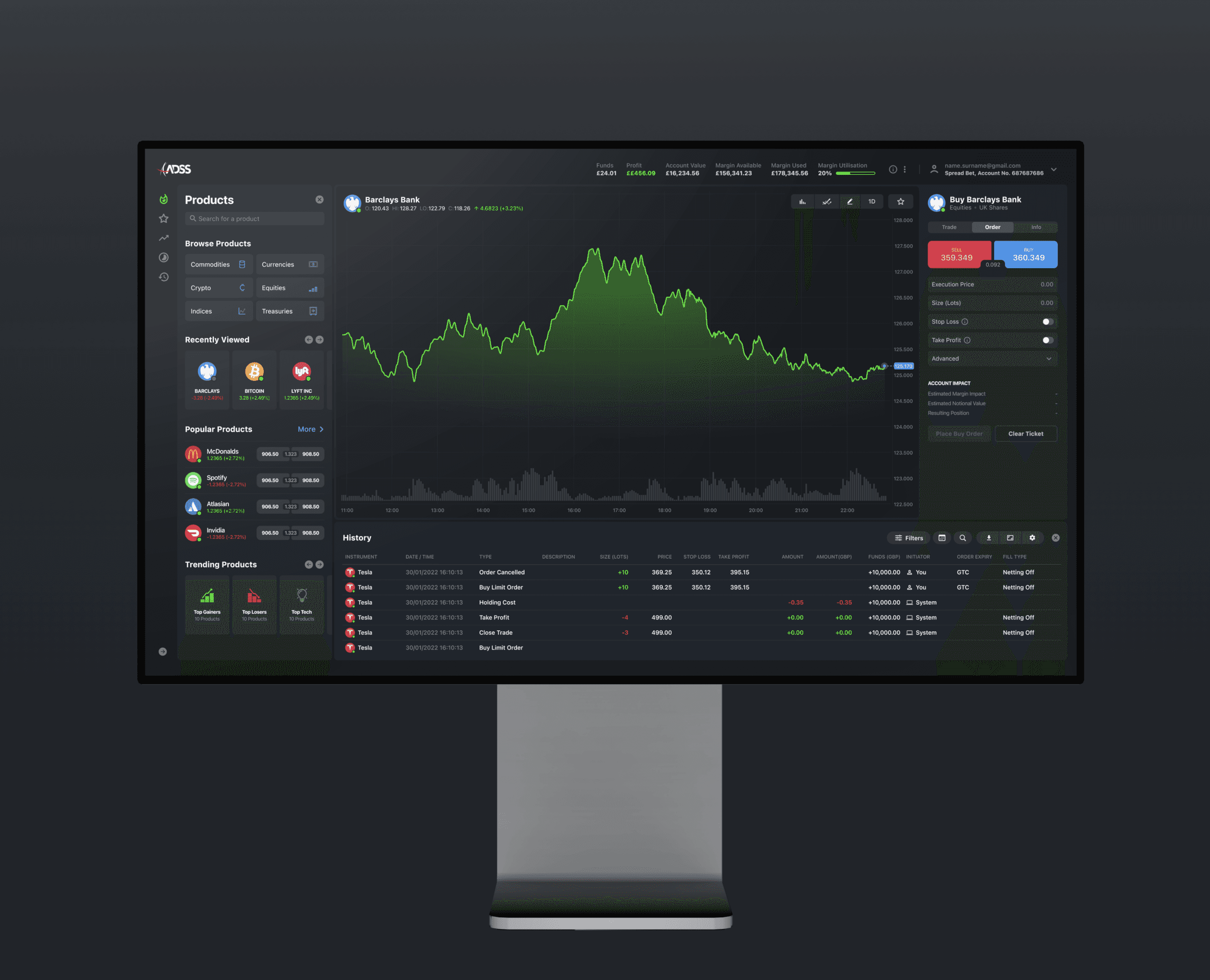
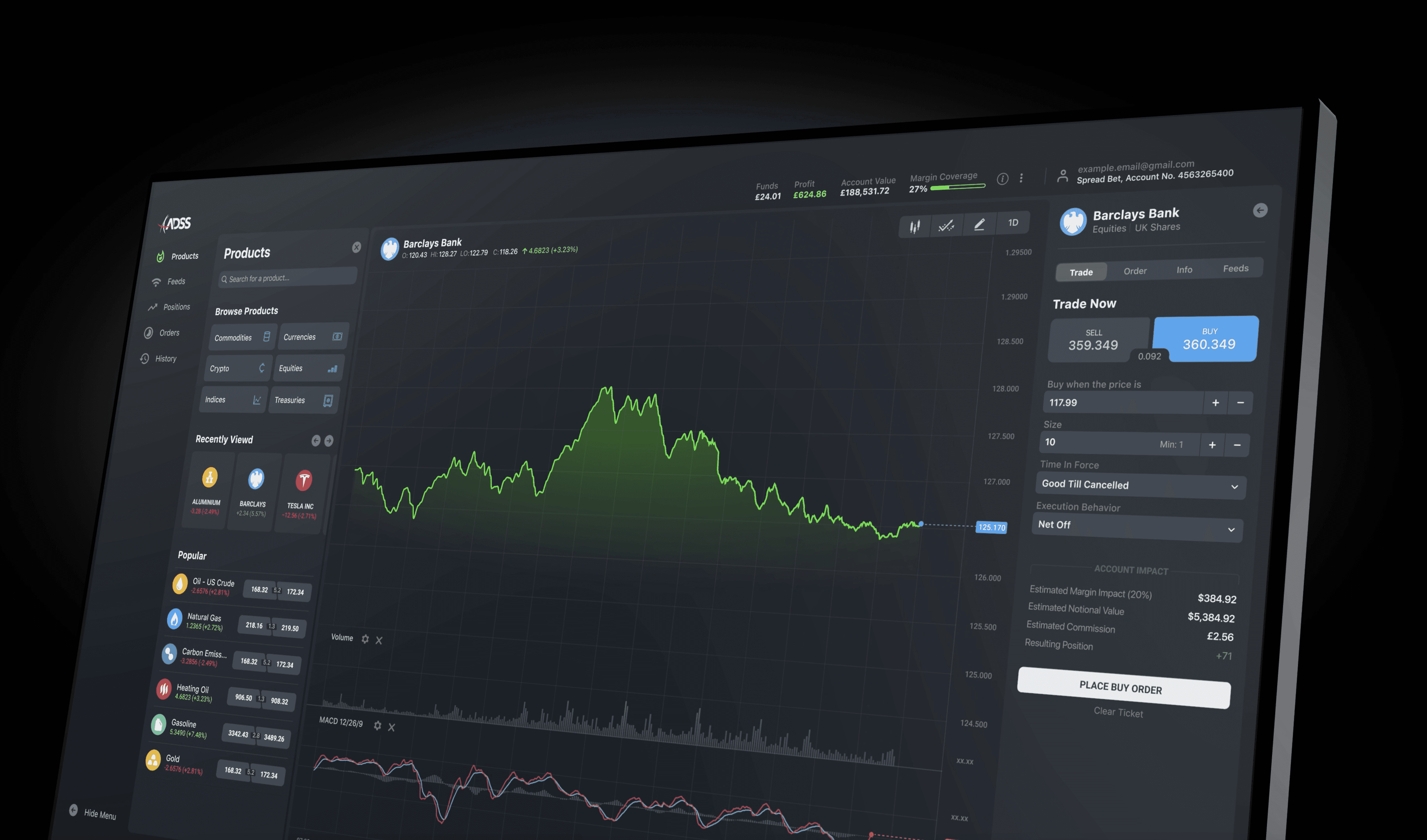
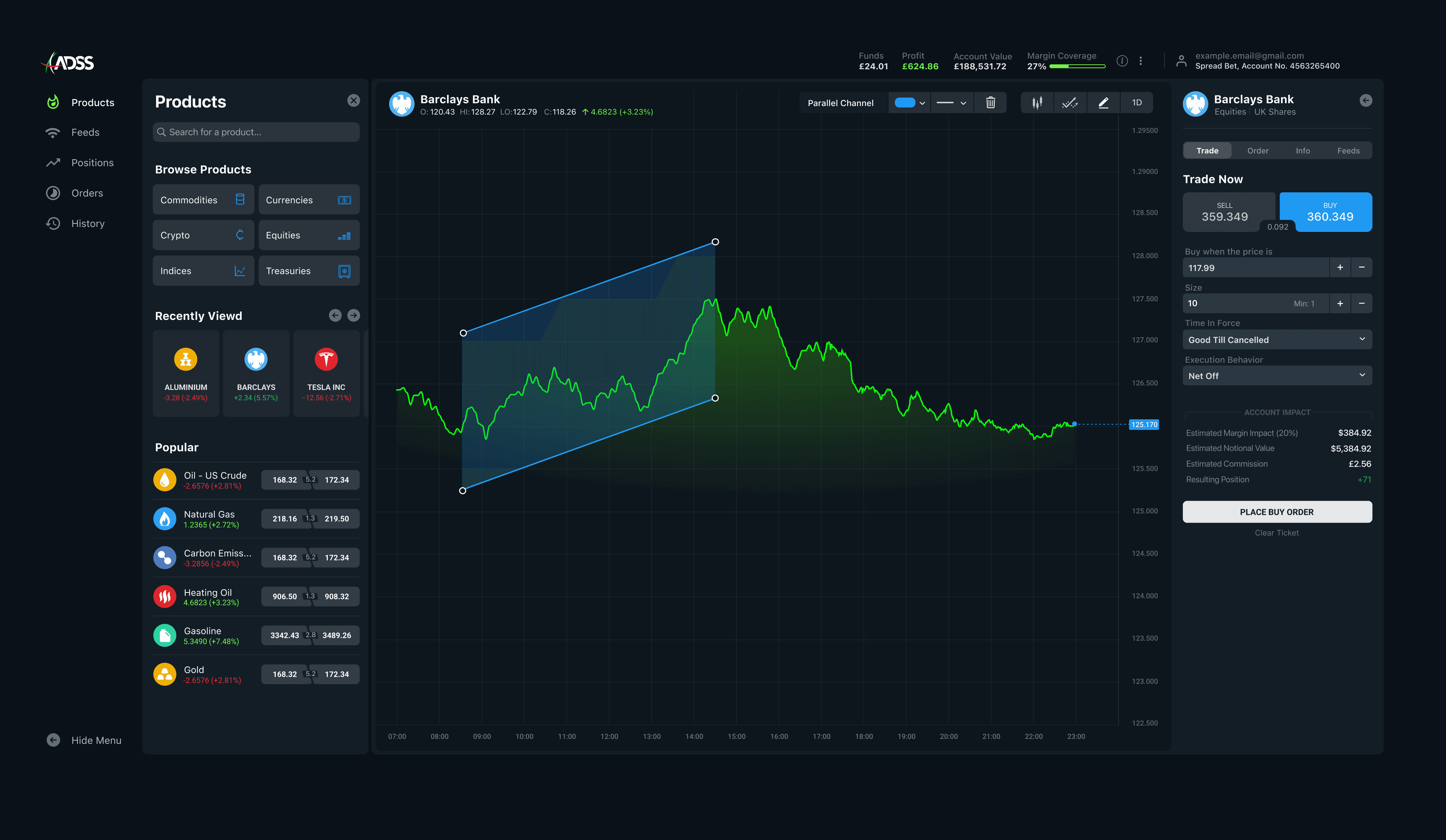
The desktop platform needed to present large amounts of fast-changing information without becoming visually overwhelming. Users had to be able to understand market conditions, identify opportunities and act quickly, while retaining access to the depth and precision expected from a professional trading environment
The challenge was not simply to fit more information onto the screen. It was to create a clear hierarchy that helped users focus on what mattered, move confidently between tasks and maintain awareness of their wider trading activity
How might we give traders greater depth and control while keeping a complex, data-rich workspace clear and manageable?
Product goals
For users, the platform needed to provide a dependable workspace for monitoring markets, analysing opportunities and managing trades. Information had to remain legible and logically organised even when several tools, data sets and workflows were active at the same time
For the business, the product needed to differentiate ADSS in a competitive market, give the organisation greater ownership of its trading technology and establish a scalable foundation for new features, instruments and customer segments
Balancing information density, usability, performance and long-term scalability became the central design challenge throughout the programme
Discovery and strategic direction
Much of the initial discovery and strategic framing was led by Ed Clayforth-Carr, Adaptive’s Head of Experience. I worked closely with Ed, ADSS stakeholders, users and Adaptive’s engineering teams to understand trader expectations, commercial priorities and the technical constraints of the emerging platform
The work included competitor analysis, conversations with users across different levels of experience and continuous collaboration with product and technology stakeholders
The research highlighted a recurring problem: many desktop trading platforms expose large amounts of information without giving users enough help to understand its relative importance. They appear powerful, but their density can make everyday tasks slower and more difficult than necessary
My role was to translate the research and wider strategic direction into a coherent product experience - one that preserved the depth expected by experienced traders while making the platform easier to understand, navigate and operate
Design principles
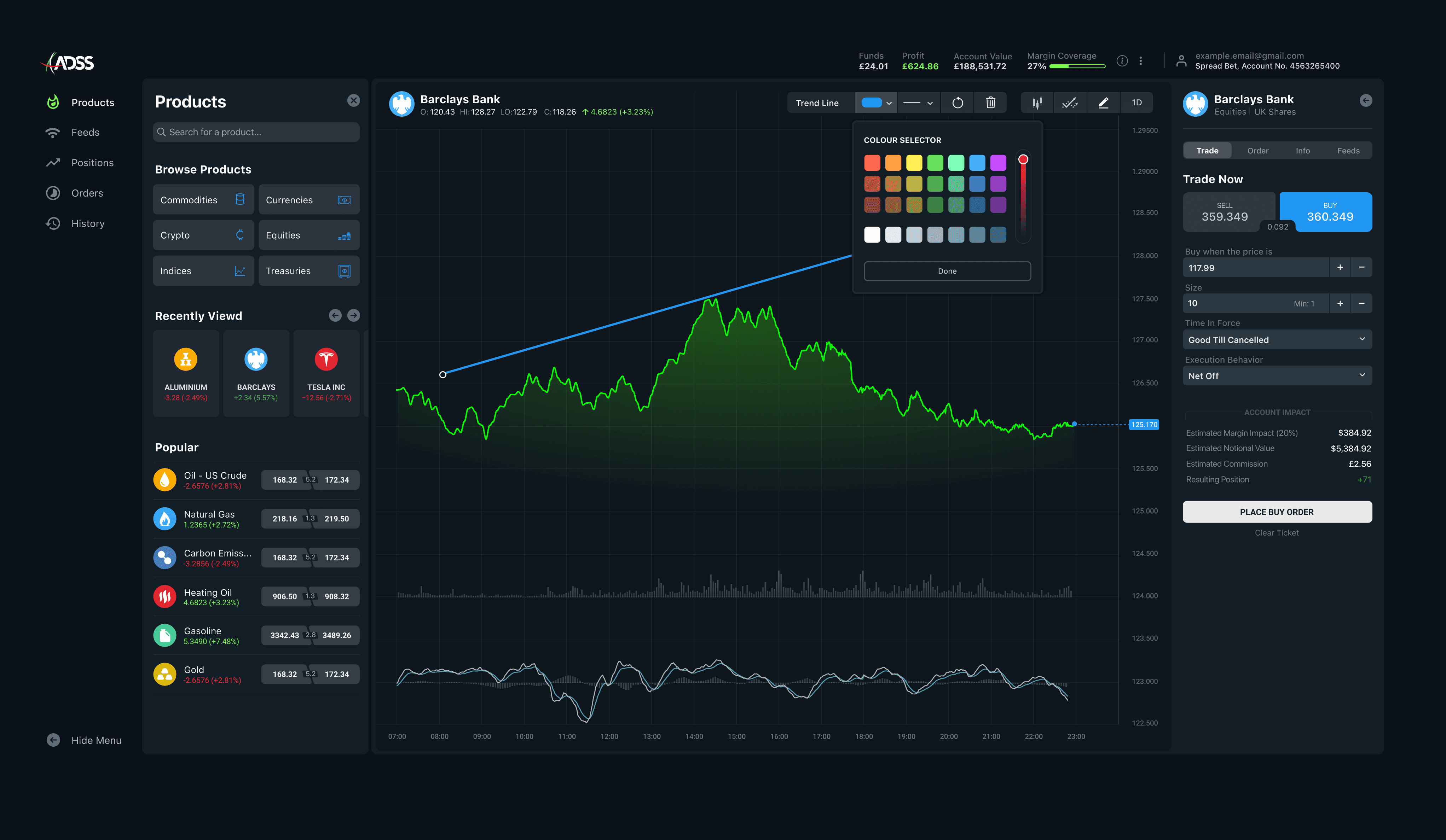
Create hierarchy within complexity
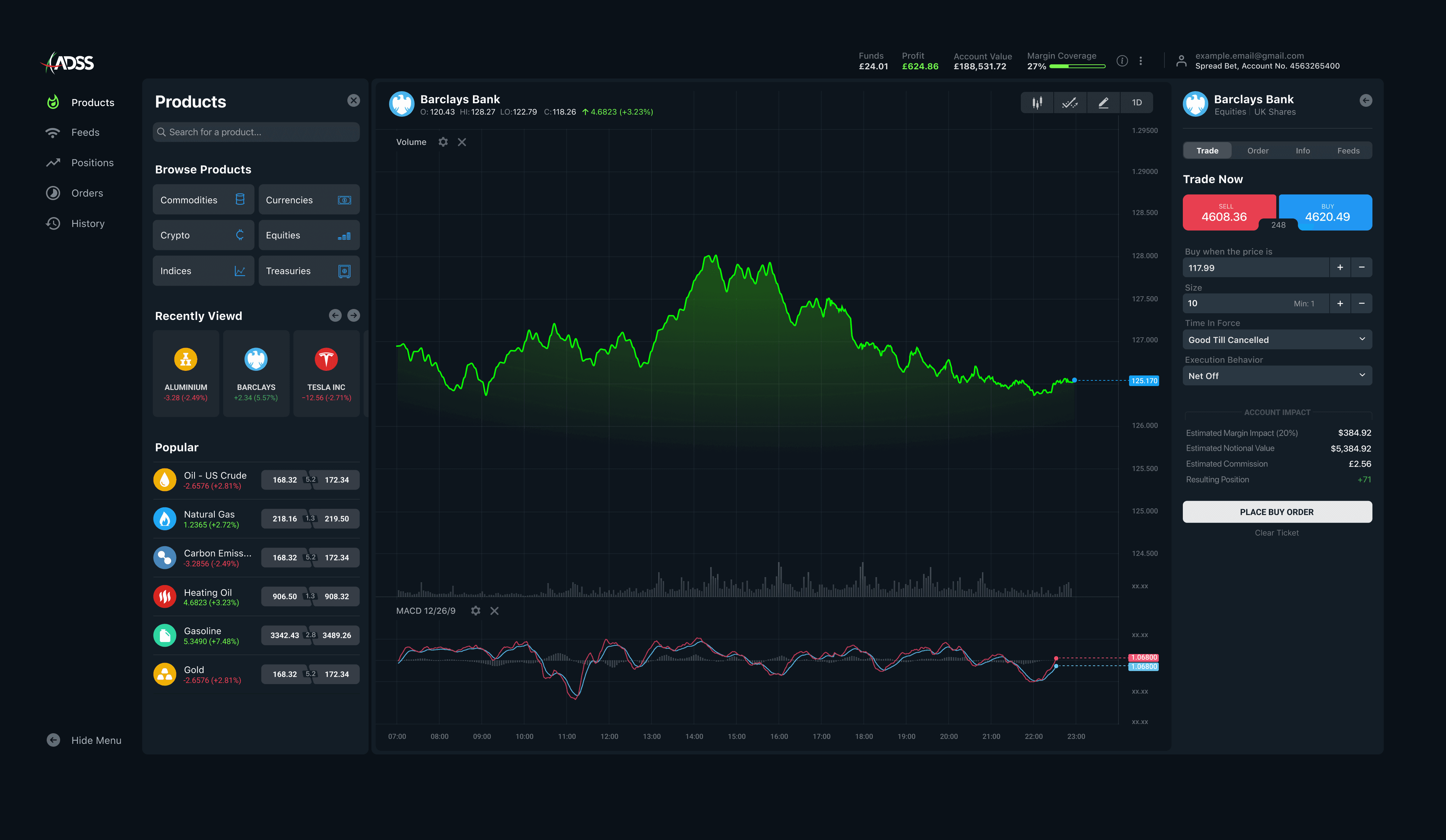
Organise dense, fast-changing information so users can distinguish primary actions and critical data from secondary detail
Support focus and situational awareness
Help traders concentrate on an immediate task without losing visibility of their wider positions, orders and market activity
Make frequent actions efficient
Reduce unnecessary steps and make recurring trading workflows feel direct, predictable and responsive
Reveal depth progressively
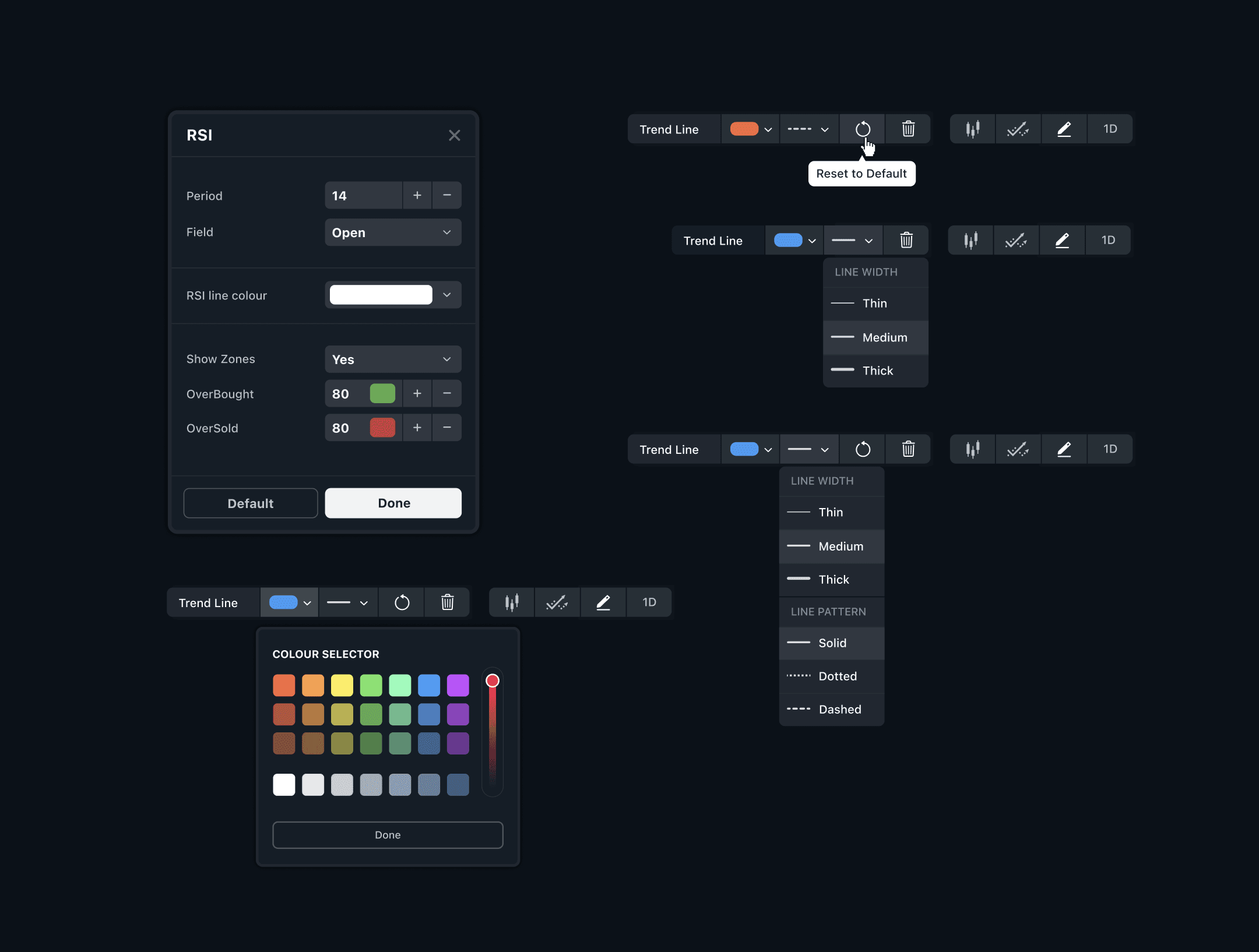
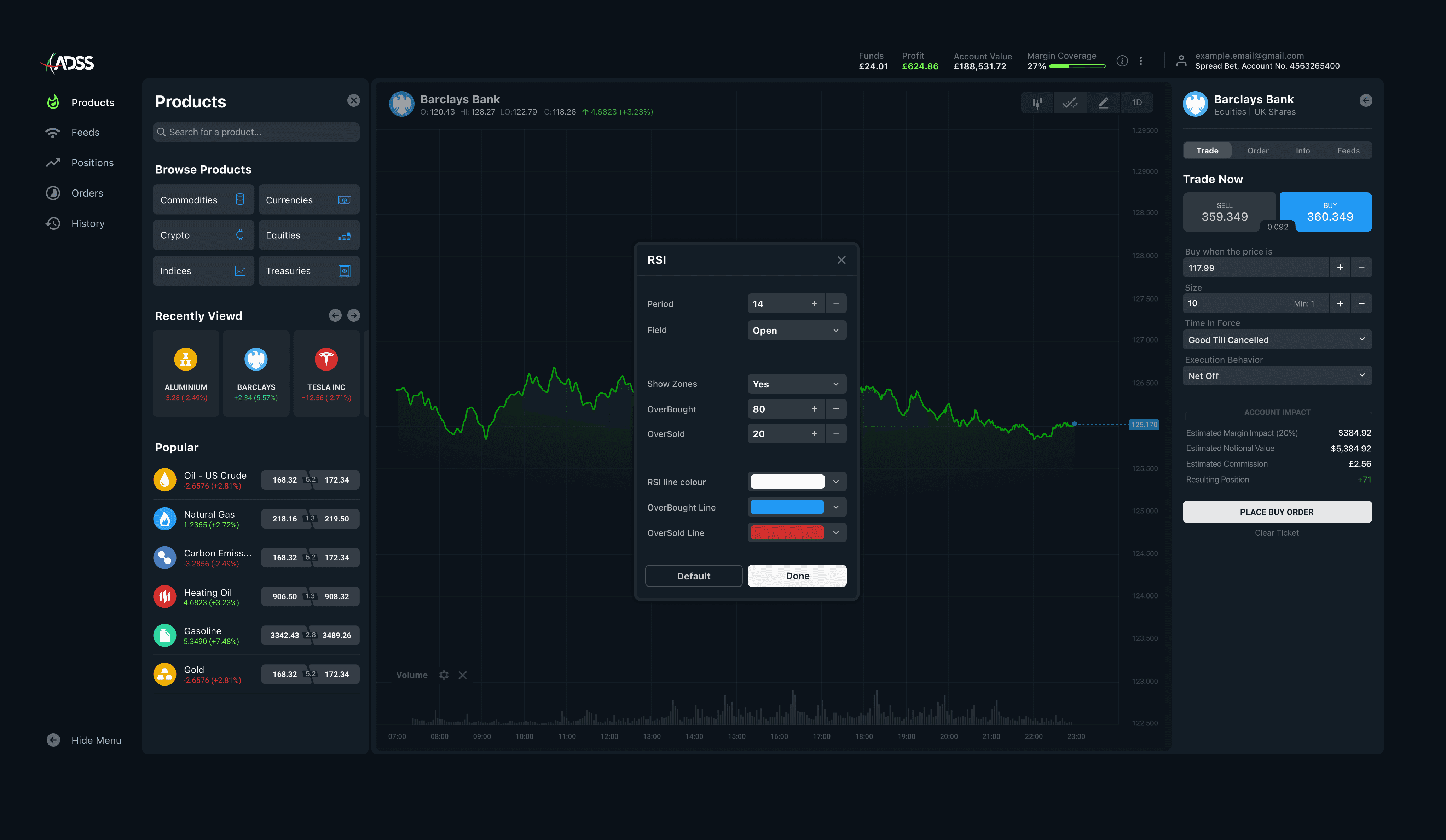
Keep advanced capabilities available without allowing every control and configuration option to compete for attention at once
Treat performance as part of the experience
In a trading product, responsiveness, feedback and perceived reliability directly influence user confidence
From strategy to delivery
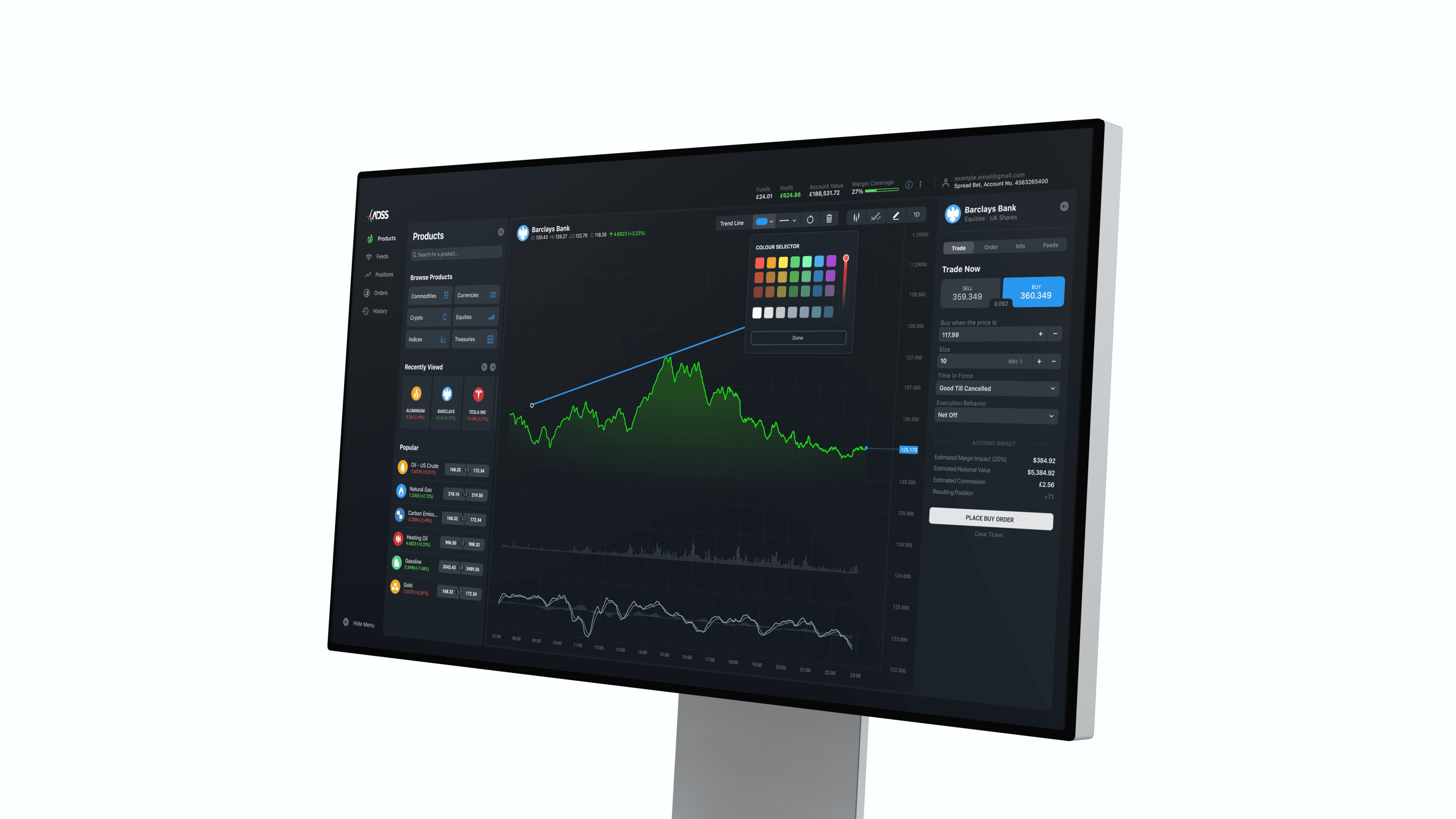
Building on the discovery and strategic direction, I led the experience from early concepts and flow mapping through to wireframes, interaction models, visual design and high-fidelity prototypes
The platform’s technology was being developed in parallel, so the design evolved continuously alongside changing system capabilities and constraints. Regular user validation, stakeholder reviews and close collaboration with engineering helped us test assumptions early and maintain a coherent, production-ready experience throughout delivery
Although I led the core desktop and mobile product design, additional designers joined later in the programme to support smaller features and ongoing enhancements.
Key desktop design decisions
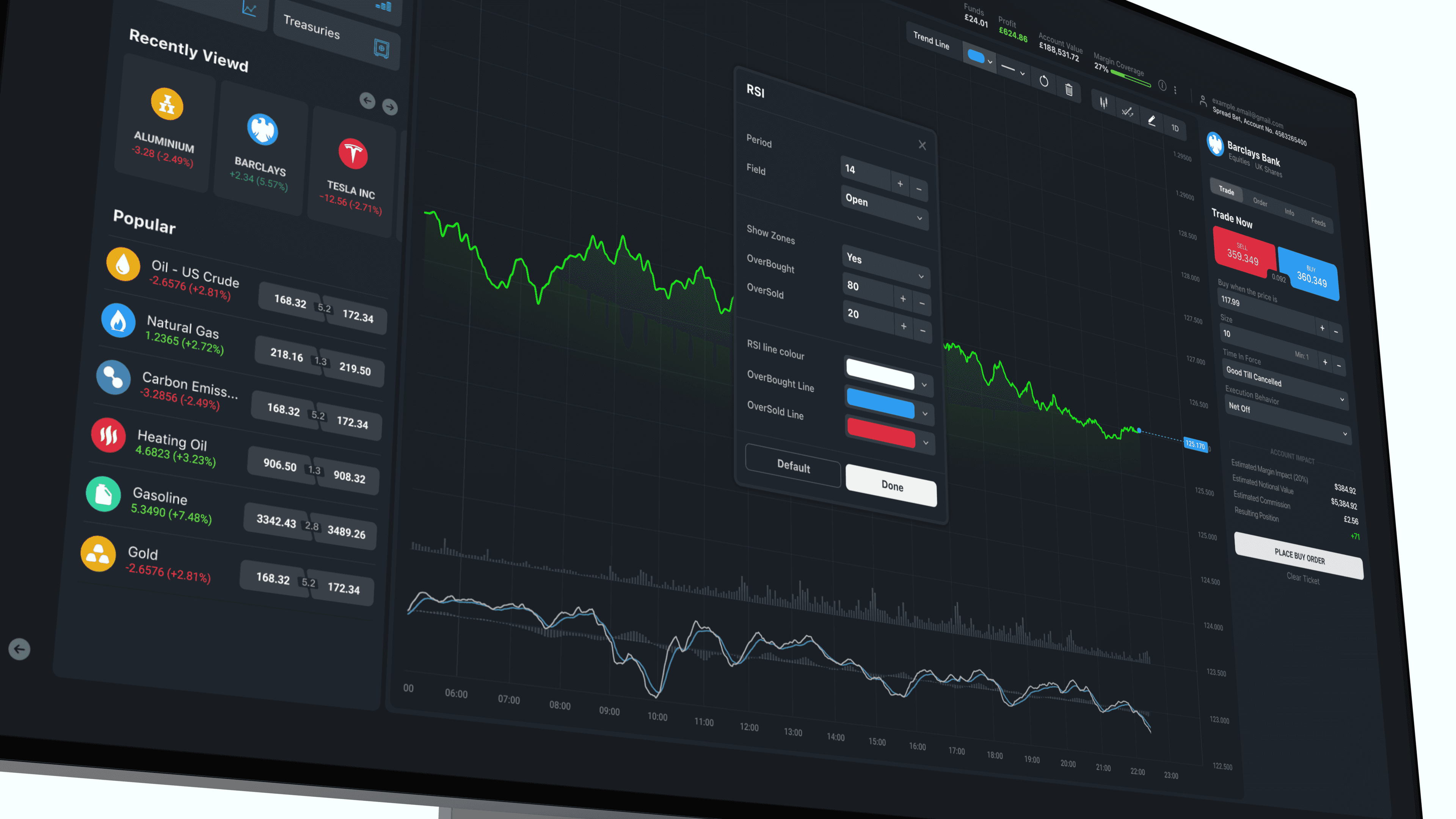
Managing information density
Desktop trading platforms need to display significant amounts of live information, but showing everything at once does not automatically make a product more useful
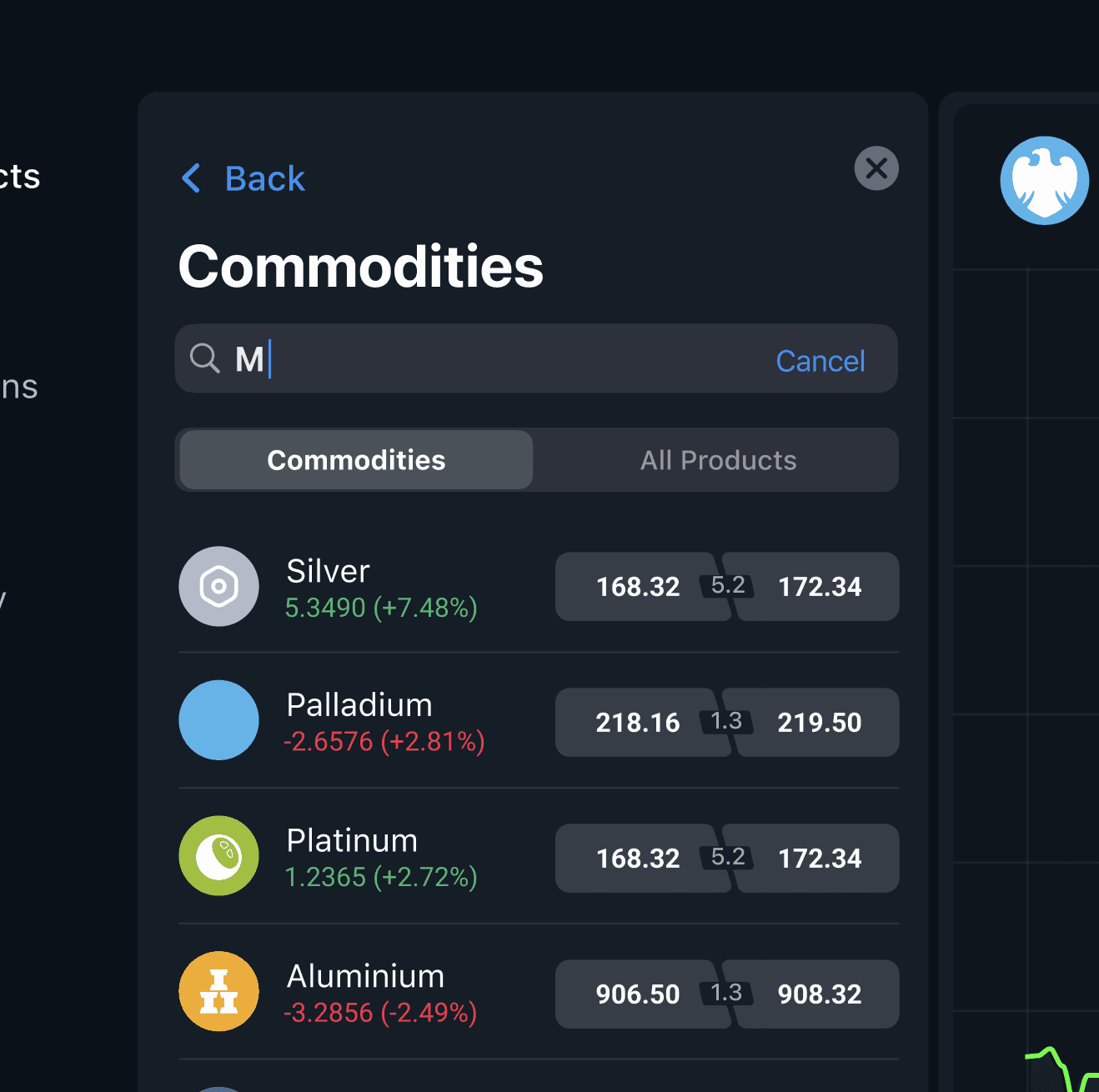
I used hierarchy, spacing, typography and consistent data patterns to help users scan the interface quickly and understand the relationships between markets, instruments, positions and actions
Primary information remained prominent, while supporting detail was organised into clearly defined regions and revealed when it became relevant. This allowed the platform to retain professional depth without feeling unnecessarily crowded
Creating a coherent trading workspace
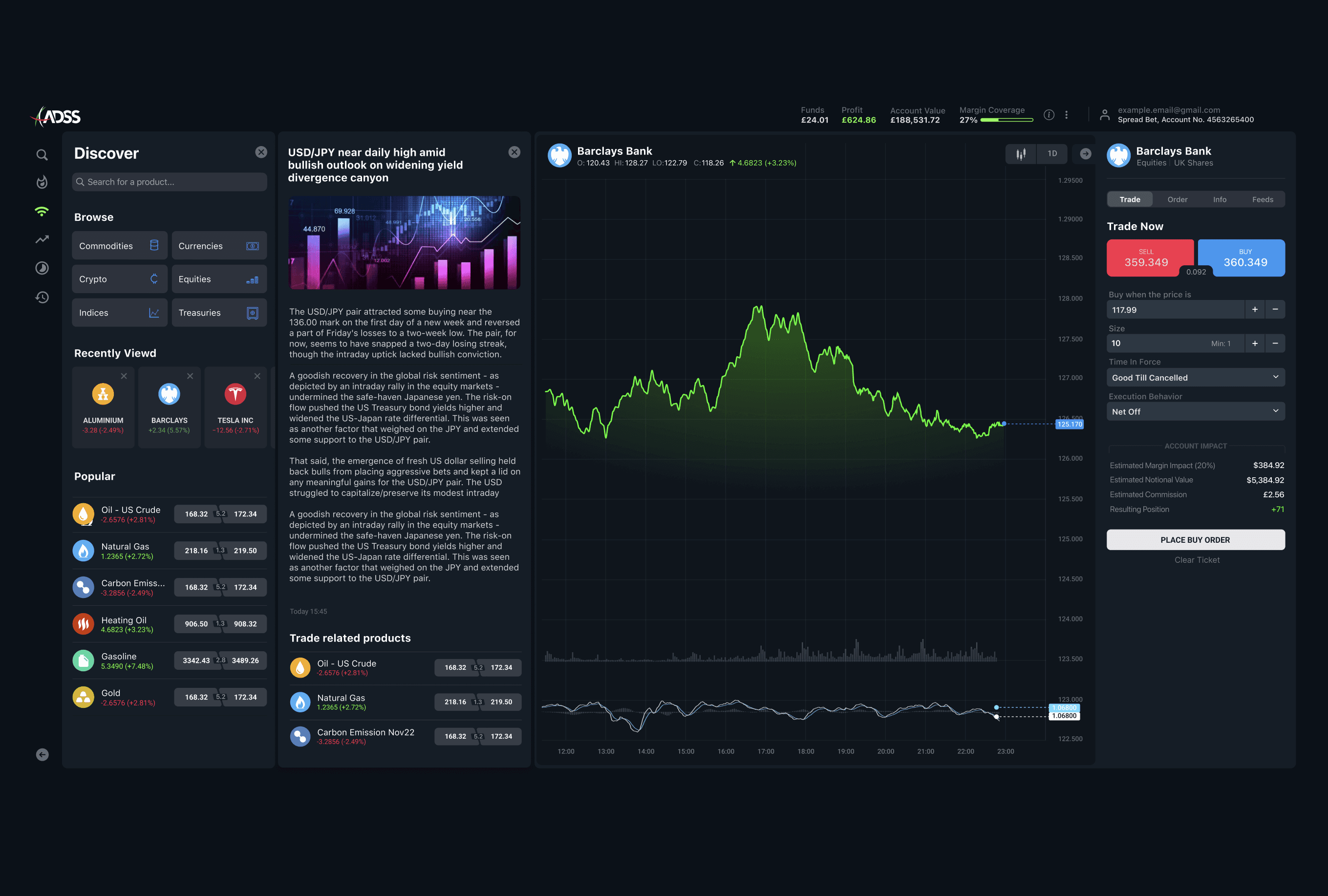
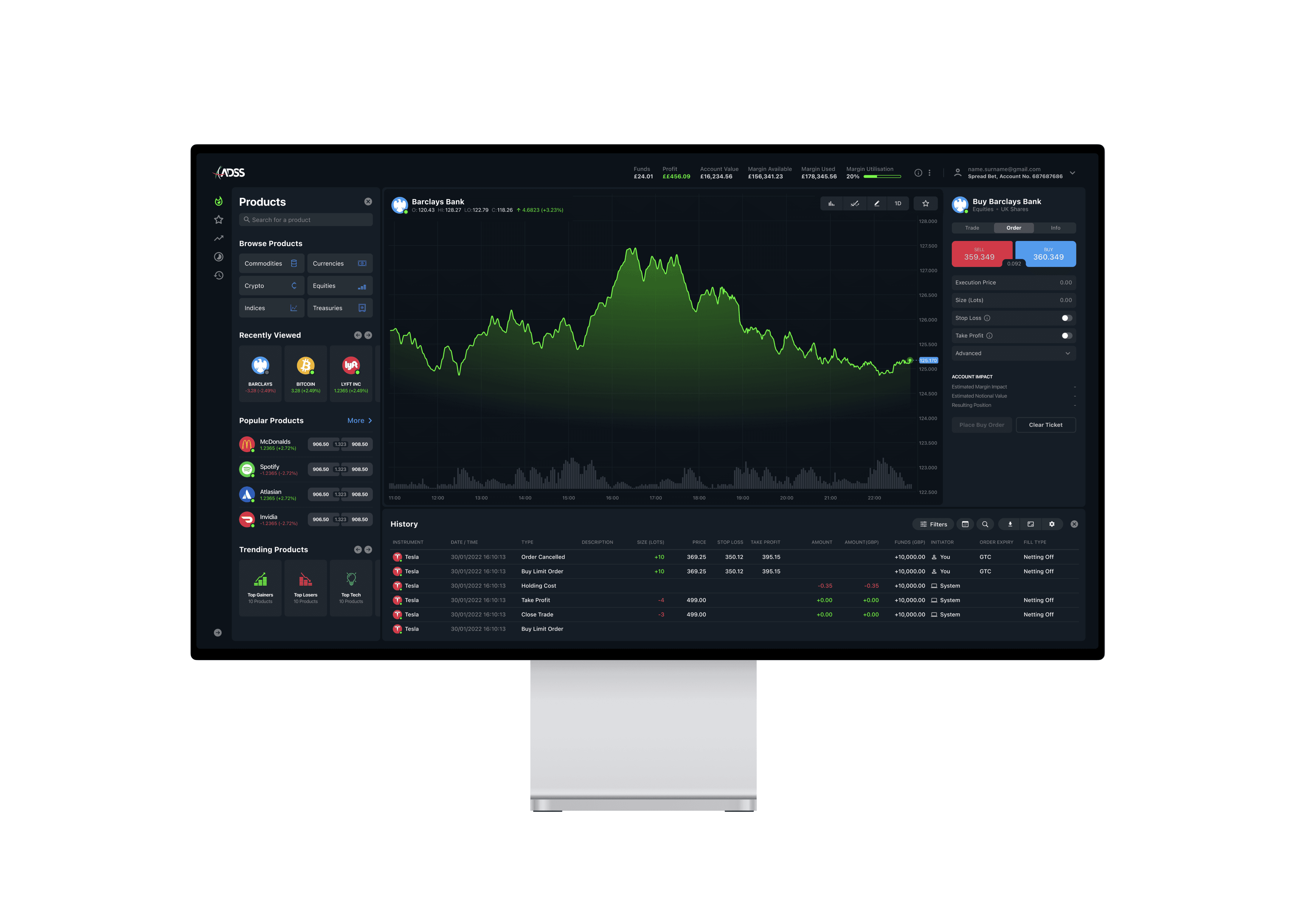
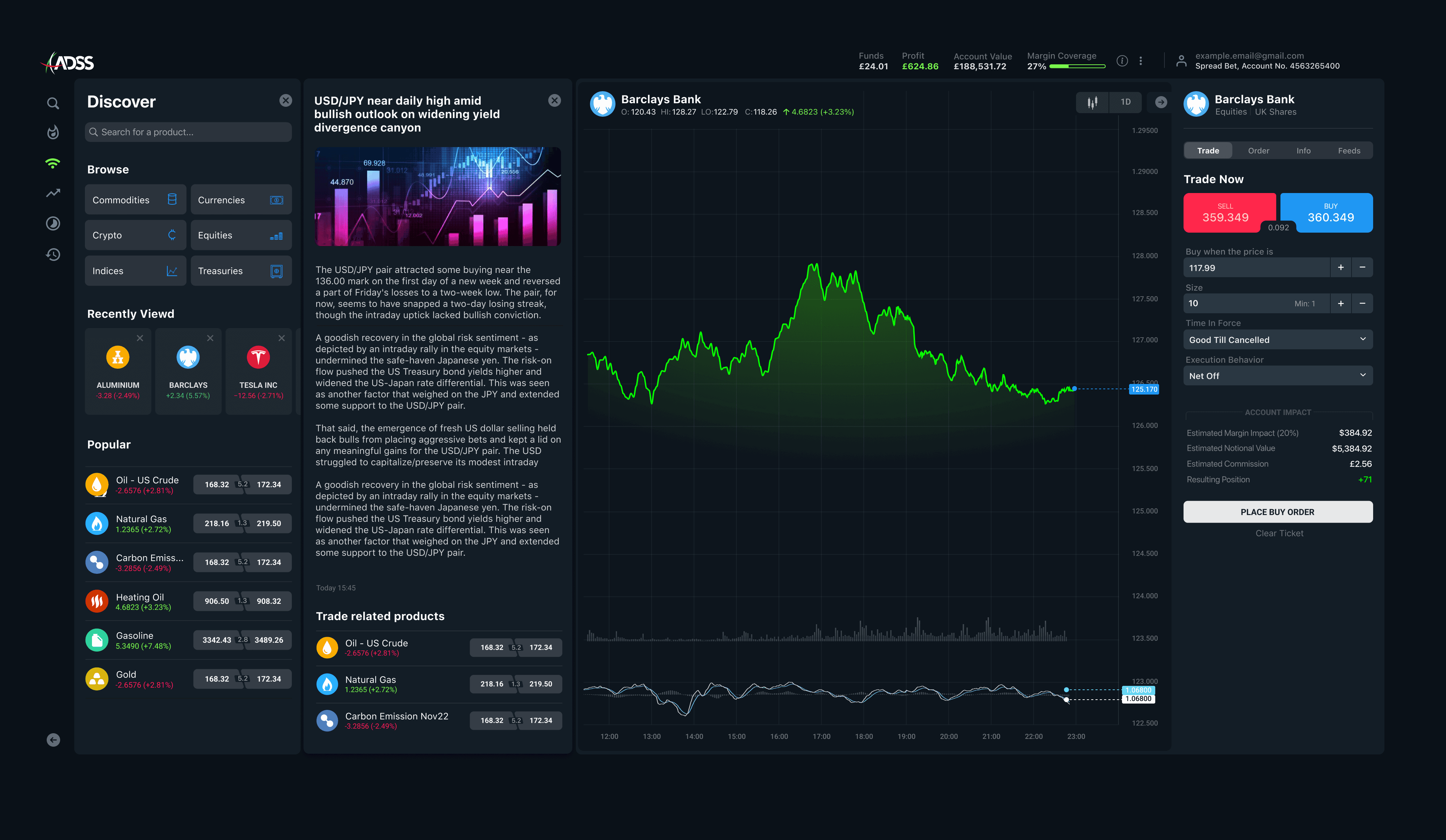
The desktop experience was designed as an interconnected workspace rather than a collection of isolated screens
Market discovery, analysis, order placement and position management needed to feel like parts of one continuous workflow. Shared context and predictable interaction patterns helped users move between these activities without repeatedly reorienting themselves
The result was an experience that supported both focused tasks and broader market awareness
Making critical actions clear
Trading actions carry financial consequences, so clarity was particularly important around order configuration, review, submission and system feedback
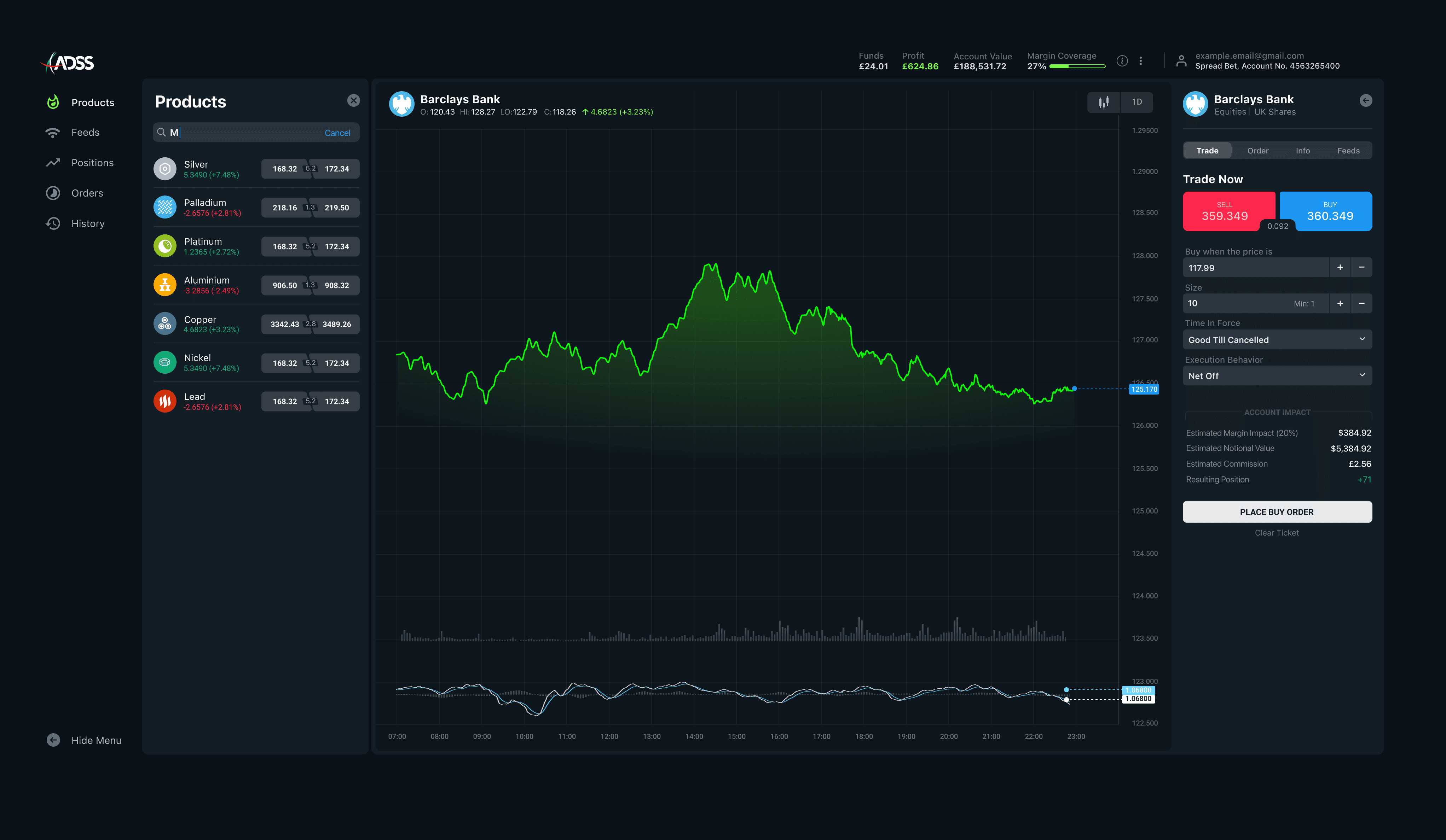
I designed these workflows to make essential information—including the selected instrument, direction, order details and risk-related values—easy to verify before committing
Clear states and immediate feedback helped users understand what had happened, what was still in progress and whether further action was required
Supporting different levels of experience
The goal was not to simplify the platform by removing professional functionality. Instead, I structured the experience so that complexity appeared in context
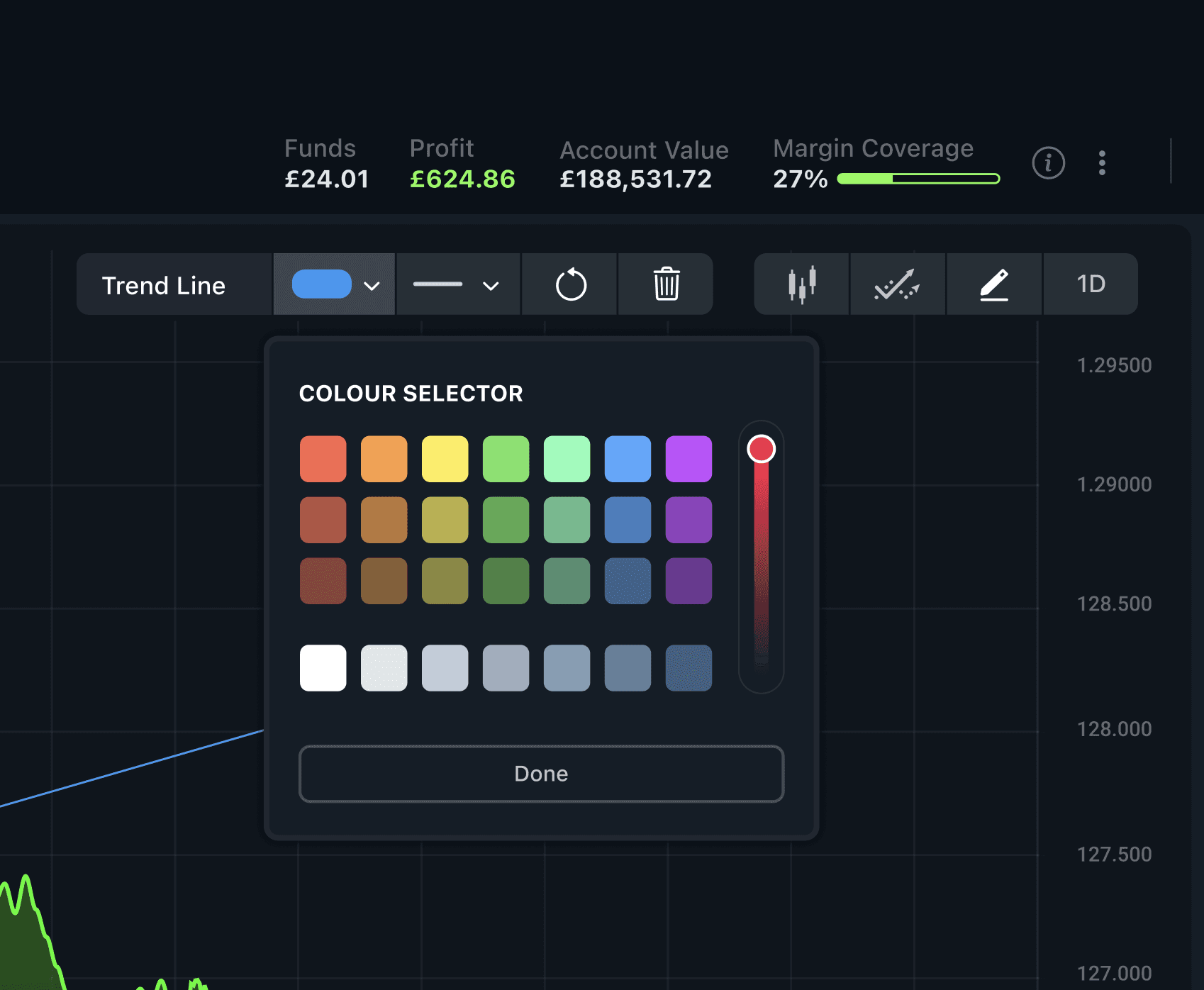
Core actions and essential information remained accessible to less experienced users, while advanced tools and configuration options were available to traders who needed greater precision and control
This allowed the interface to support a wide range of users without forcing everyone into the same level of complexity
The final product
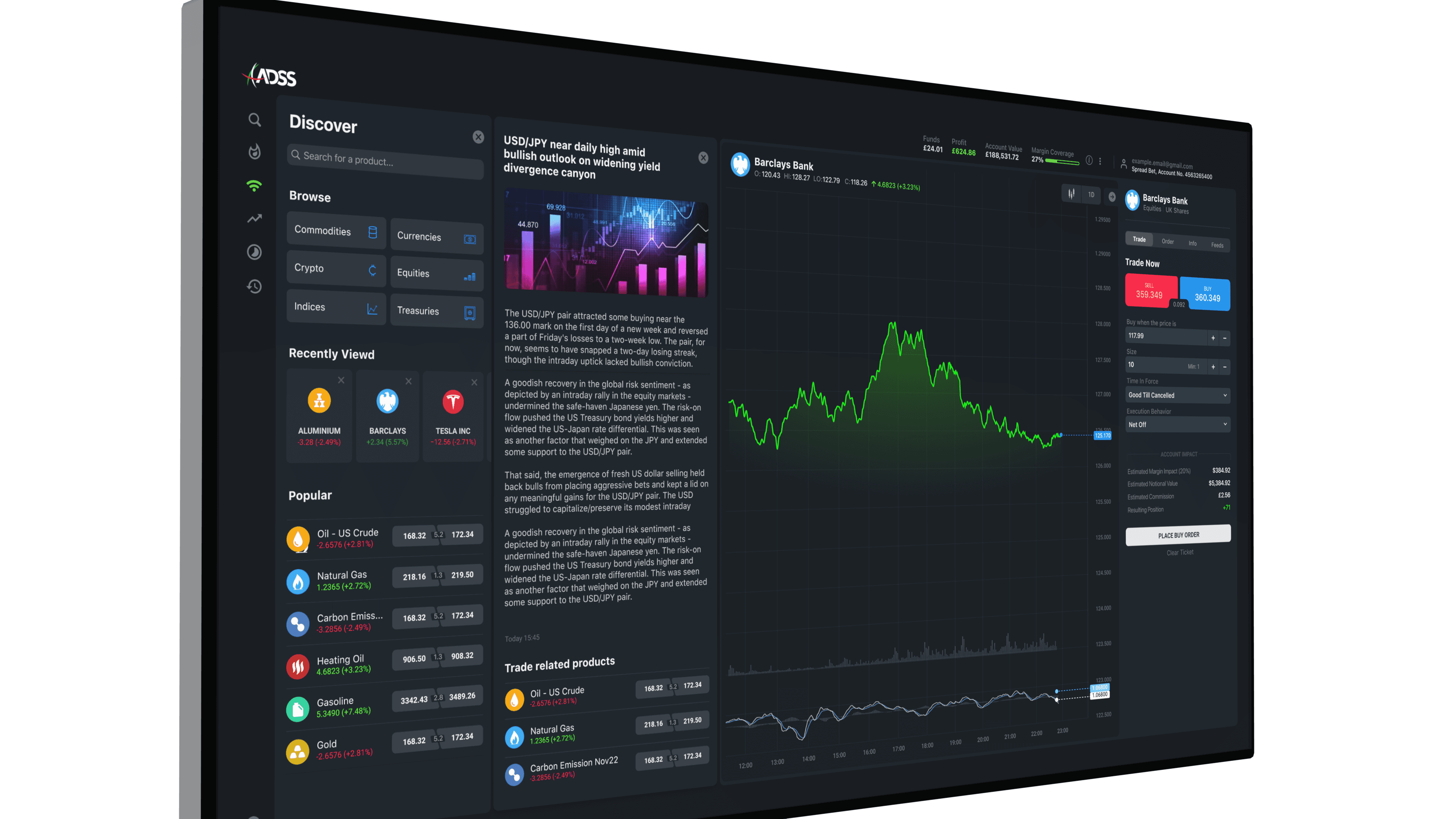
The final desktop platform brings market monitoring, analysis and trade management together within a clear, high-performance workspace
The experience provides the depth and flexibility expected by experienced traders while using hierarchy, progressive disclosure and consistent interaction patterns to make complex workflows easier to understand
Together with the mobile platform, it established a cohesive product ecosystem that allowed users to move between devices while retaining familiarity and confidence
This project reinforced that clarity in a professional product does not come from reducing its capabilities. It comes from creating a meaningful hierarchy around them
Designing the desktop experience required balancing overview with focus, consistency with flexibility and professional depth with everyday usability. The most effective decisions were often not about removing information, but about presenting it in the right context and at the right moment
The programme also demonstrated the value of close collaboration between experience leadership, product design and engineering. Working together from early discovery through delivery allowed the experience to evolve alongside the technology without losing coherence
Recognition
The wider ADSS trading programme and mobile experience received multiple industry awards and recognition
Best Forex Broker
Best Trading
App 2024
Most Trusted Forex Broker
Forex Expo Dubai - Best Trading App 2024
GBM Awards - Best Mobile Trading App 2023
Dribbble
Financial Innovation Awards 2017
x4
Banking Technology Awards 2017
IT World Awards 2018
GBM Awards - Best Mobile Trading App 2023
GBM Awards - Best Mobile Trading App 2023